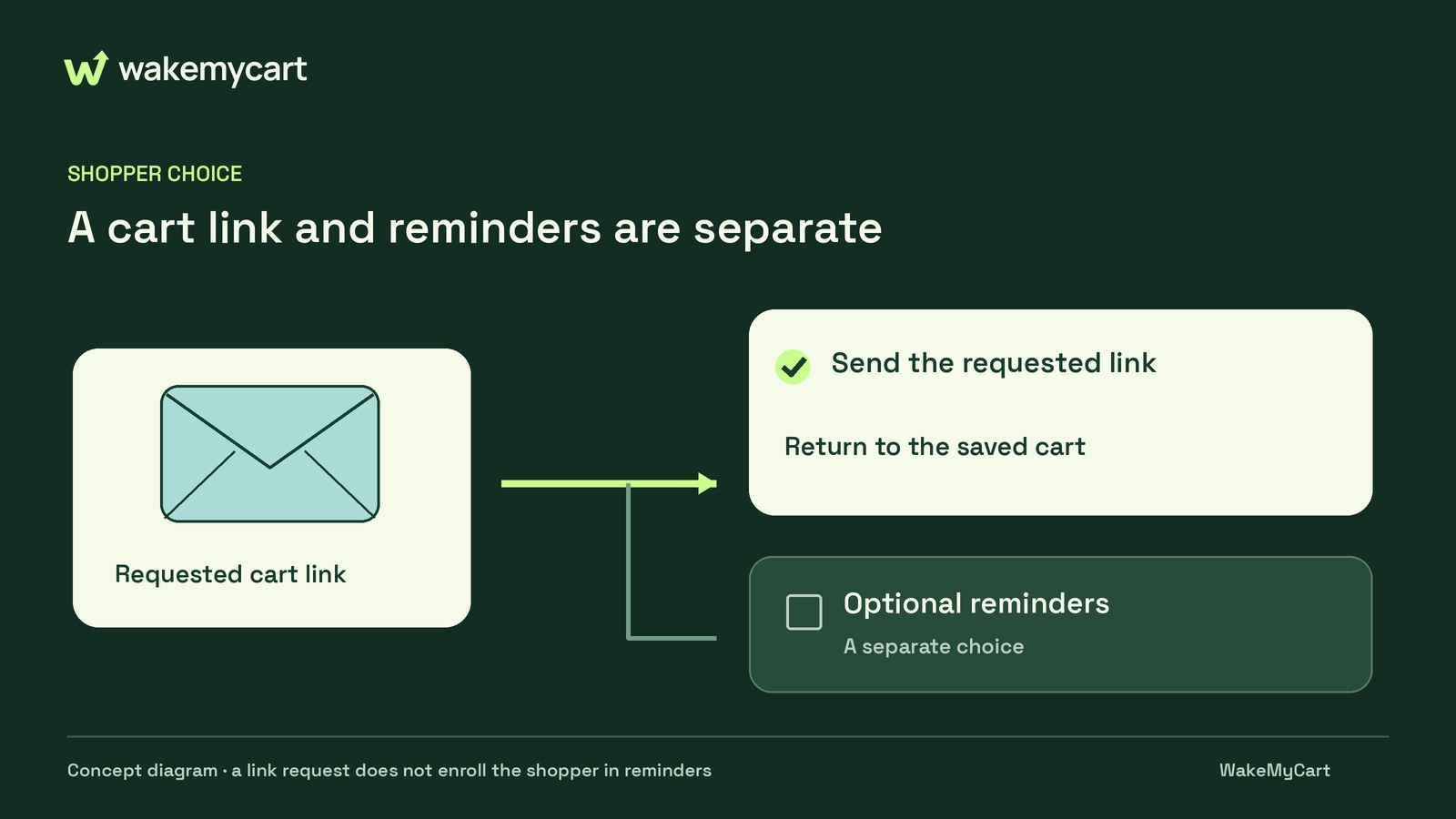
A request for a cart link should send that link, not silently start a reminder sequence. Give reminders their own unchecked choice, and make sure reopening the saved-cart link cannot change that choice.
First, check what your WooCommerce form submission triggers. If link-only requests start follow-ups, exclude those requests. If reliable exclusion is not possible, pause the affected reminder automation until the two paths are separated.
Define the two requests
This worked example is a hypothetical design, not built-in WooCommerce behavior. Confirm that your existing tools can enforce it before using the copy.
It separates two intentions:
- Send my cart link: Send the requested email without enrolling the shopper in follow-ups.
- Remind me about this cart: Record an optional reminder request, then wait for separate email confirmation before making reminders eligible.
The example allows up to two reminders during the three days after confirmation, stopping sooner after purchase or withdrawal. These are hypothetical inputs, not universal recommendations.
This is operational guidance, not legal advice or a compliance guarantee. Permission, purchase checks and withdrawal controls remain separate requirements.
Write the form around the shopper’s choice
Form heading: Email yourself a link to this cart
Email field label: Your email address
Explanatory text: We’ll send you a link so you can return to this cart. Requesting the link alone does not sign you up for reminders.
Optional checkbox, unchecked by default: Yes, email me up to two reminders about this cart during the three days after I confirm by email. Stop if I complete this purchase or unsubscribe.
Submit button: Email me my cart
The button describes the action everyone is requesting. Leaving the reminder choice unchecked must not prevent delivery of the link. Do not combine this choice with newsletter enrollment or treat acceptance of another notice as a reminder request.
Use distinct success messages:
- Link only: We’ve sent your cart link. This request has not enrolled you in reminders.
- Reminders selected: We’ve sent your cart link. Confirm reminders separately in that email if you want the optional follow-ups.
If your system cannot enforce the promised limits or stopping conditions, repair the workflow rather than publishing copy it cannot honor.
Keep the requested email useful on its own
The shopper should not have to confirm reminders to access the cart link.
Subject: Your cart link
Email text: You asked us to email a link to your cart. Use the button below to return to it. Prices and availability may change.
Primary button: Return to my cart
For a link-only request, end with:
Closing text: We have not enrolled you in cart reminders through this request.
Only when the shopper selected reminders, add:
Reminder heading: Confirm your optional cart reminders
Reminder text: You also asked for up to two reminders about this cart during the three days after confirmation. Confirm below to enable them. You can use your cart link without confirming reminders.
Separate button: Confirm cart reminders
These actions need different destinations and effects. The cart button returns the shopper to the cart; the confirmation action records the separate confirmation. Do not make the cart button perform both actions.
Test the cart destination too. If it cannot restore the intended cart, fix the behavior or change the promise. A saved link should not be presented as reserving products or freezing prices.
Trace three shopper journeys
Each journey assumes a new cart with no existing reminder permission. These are expected outcomes to verify, not reported test results.
1. Request only the link
Action: Submit with reminders unchecked. Recorded state: Link requested; no affirmative reminder choice. Sending: Send the requested link email, but exclude the request from reminders. Opening the email changes nothing.
2. Choose reminders, then confirm
Action: Select reminders and submit. Recorded state: Pending confirmation. Sending: Send the requested link email with the separate confirmation option; no reminders while pending.
Action: Complete confirmation. Recorded state: Confirmed, with the reminder window recorded. Sending: Reminders may become eligible within that allowance, subject to purchase, withdrawal and other exclusions. Confirmation does not mean “send immediately.”
The three-day window starts at confirmation. Reopening the cart link does not restart it.
3. Reopen the link without opting in
Action: Request only the link, then reopen it later. Recorded state: Still no affirmative reminder choice. Sending: No reminder sequence starts. Returning, browsing or changing quantities is not a substitute for a separate choice.
Use observable checks as the launch gate
Keep link requests and reminder decisions distinguishable; one generic “subscribed” field should not represent both. Retain enough information to review:
- The link request, its time and cart reference.
- The reminder choice and wording shown.
- Any required confirmation and its time.
- The reminder window, messages sent, withdrawal and closure state.
Use controlled test addresses in an environment where follow-ups cannot reach customers. Inspect records and the rules governing later scheduled sends, not just the current queue.
Where reminders must be blocked, verify that exclusion holds when scheduled sending runs. An empty inbox or queue beforehand is not proof of exclusion: a message might be scheduled or sent later.
The final check below uses prior permission history. The three new-cart journeys cannot establish that an earlier withdrawal or expiry remains effective.
Stopping reminders should not itself require revoking an otherwise-valid cart link. Link expiry and cart restoration are separate checks: do not promise indefinite access or guaranteed restoration after purchase.
Start with the link-only test and retain its record and scheduled-send evidence. If it fails, keep these requests out of follow-ups; if that exclusion cannot be enforced, pause the affected automation. Repair the controls and repeat the test before enabling reminders.